Surf trips usually mean choosing. Waves or culture. Beach shack or real town. In most of the world you surf somewhere small and quiet and then, on the last day, drive to a city to see something. Banderas Bay does it the other way round, every single day, because of its shape. The bay is a giant horseshoe. The north arm — Nuevo Vallarta, Bucerías, La Cruz, Punta de Mita — catches the swell and holds our surf beaches. The south-east corner, folded in behind Cabo Corrientes, is where Puerto Vallarta grew up, on flat water, exactly because ships and fishermen could shelter there. The same geography that gives La Lancha its waves gives the Malecón its glassy sunsets. You get both. You just have to know the order: waves in the morning, town in the afternoon.
First, the honest answer: is there surf in the Old Town?
Barely, and we say that as people who would love to tell you otherwise. Playa Los Muertos, the Old Town's main beach, faces almost due west into a bay so well protected that most of the year it laps rather than breaks. On the biggest south swells of summer a short, dumping shore-break appears — fun for bodysurfing and for the local kids on boogie boards, occasionally rideable on a longboard, never a place to learn. Our post on whether you can surf in Puerto Vallarta goes into the details; the short version is that "Puerto Vallarta surfing" means the north shore of the bay and Riviera Nayarit, 30–75 minutes away, and our surf lessons include pick-up from town for exactly that reason. What the Old Town does have, brilliantly, is flat water for paddle boarding at Los Arcos just south of town, and everything below.
1:00 p.m. — arriving from the north, salt still on you
The transition is the fun part. You leave Nayarit — sandy feet, dripping hair, the taste of the fish tacos from El Anclote — cross the Ameca river back into Jalisco, pass the marina and the hotel zone, and the road narrows and starts to climb and drop. Then suddenly the buildings are white with red-tile roofs, the streets are cobbled, and there is a crown on top of the church. You are in El Centro. Drop your board at the hotel (or let us take it back to the store), rinse off, put on sandals, and walk downhill. Everything in the next section is within twenty-five minutes on foot.
1:30 p.m. — the Malecón, walked the right way
The Malecón is Puerto Vallarta's seawall promenade: roughly a kilometre of wide, car-free walkway running along the water from the Hotel Rosita end down to the mouth of the Río Cuale, with the Old Town rising behind it and Banderas Bay in front. Locals treat it as the town's living room; visitors sometimes rush it. Walk it slowly, from north to south, and look at three things:
- The sculptures. The Malecón is an open-air gallery: the boy riding a seahorse that has become the town's symbol, a triumphal arch of bronze figures, chairs and ladders and creatures you will want to climb (people do). Every sculpture has a story and a plaque; a free walking tour explains them most mornings in the high season.
- Los Arcos amphitheatre. Not the rock formation — the set of stone arches by the main plaza, framing the sea. Evening performances, clowns, dancers and the Papantla Flyers, who spin down from a tall pole on ropes in a ceremony older than the town.
- The church crown. Above the main plaza, the Church of Our Lady of Guadalupe wears a crown on its tower. Look up at it from the Malecón, then walk two blocks inland to see it close — and to find the shade of the plaza and a raspado (shaved ice) cart.
Surfer's note: the Malecón is where you read the bay. Look north-west across the water and you are looking straight at the mouth of the bay and, on a clear day, the hump of Punta de Mita. In winter, whales blow out there in plain sight of the ice-cream stands (see our whale season guide). In summer, a line of white on the far shore means the south swell is running and tomorrow will be good.
2:30 p.m. — Isla Cuale: the river island
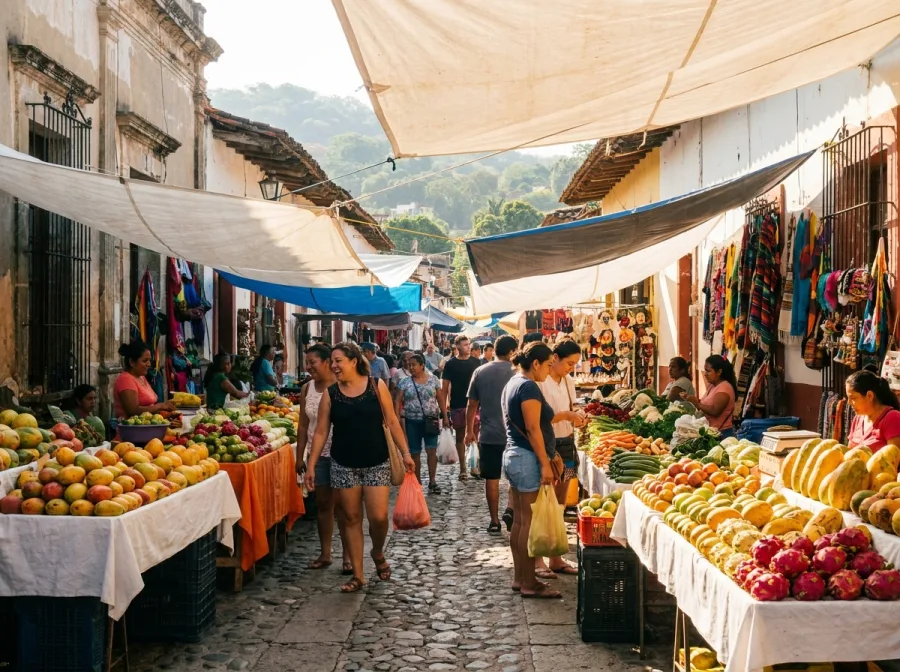
At the south end of the Malecón the Río Cuale comes down from the Sierra Madre and splits around a long, thin island before it reaches the sea. Cross onto it by one of the footbridges and the noise drops. Under huge old trees there is a flea market of stalls — silver, embroidered blouses, hammocks, huaraches, more surf-print T-shirts than the town has surfers — plus a small cultural centre, a museum on the island's tip and a couple of riverside restaurants where the tables are practically in the water. It is the best place in town to buy a hammock for your terrace and the best place to sit for half an hour with a lime soda while your shoulders remember the morning's paddling. Iguanas the size of small dogs live in the trees. They are unbothered by you.
3:30 p.m. — the Zona Romántica and Los Muertos
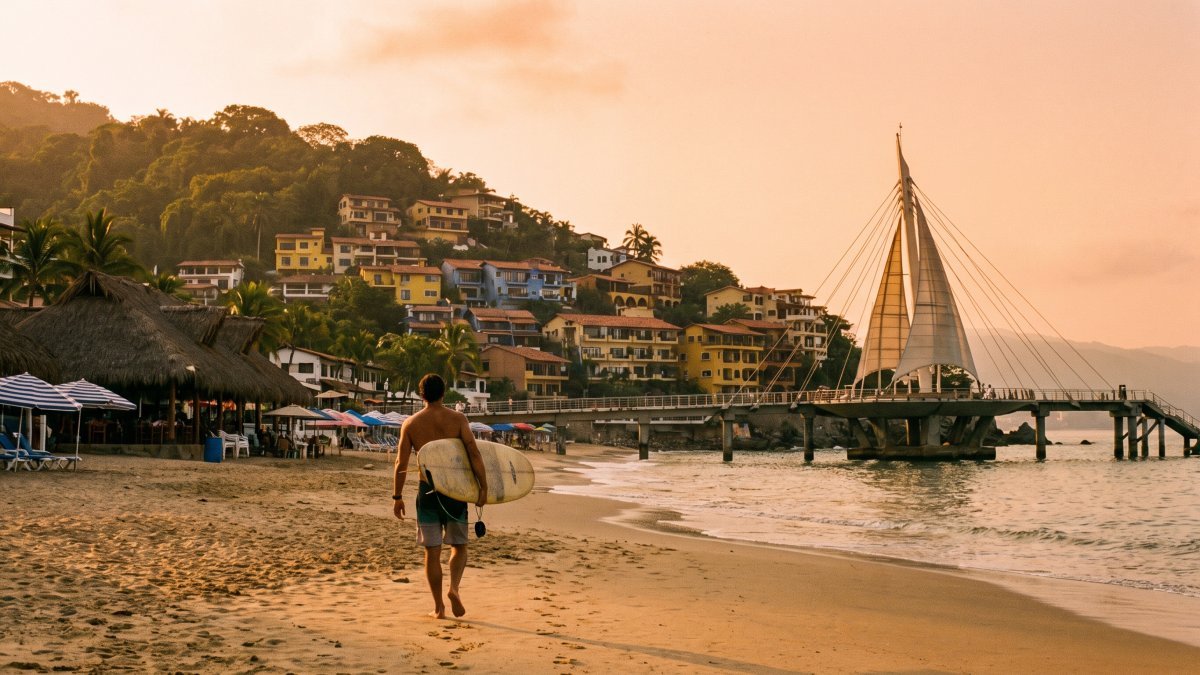
Cross the river on the south bridge and you are in the Zona Romántica — Old Town proper, also called Emiliano Zapata after the neighbourhood's real name. It is steep, cobbled, colourful and dense: cafés, galleries, tailors, taco stands and boutique hotels stacked up the hillside on streets named after seas and rivers. Walk down Olas Altas (the street is called "high waves"; the irony is not lost on us) and you come out onto Playa Los Muertos, the town's beach — a wide curve of sand backed by restaurants with tables on the sand, umbrellas, vendors selling grilled fish on a stick and, at the far end, the Los Muertos pier: a modern, sail-shaped walkway that reaches out into the bay and lights up in colour at night. Walk to the end of it. Turn around. That view — the whole town climbing the hill, the church crown, the jungle mountains behind — is why people fall for Puerto Vallarta.
Swim here (calm, warm, watch for the shore-break on big days), or keep going south along the rocks to the small coves of Conchas Chinas, the prettiest snorkelling within walking distance of the centre. Our snorkelling spots guide covers those and the boat-only ones further south.
5:00 p.m. — eat like a surfer, town edition
By now you have earned it. Our Eat Like a Surfer page and the best seafood in Puerto Vallarta list have specific names; the pattern for the Old Town afternoon goes like this:
- Tacos first. The Zona Romántica has some of the best street tacos on the coast — al pastor shaved off the spit, birria, carne asada — and a plate of five with a horchata costs less than a coffee back home.
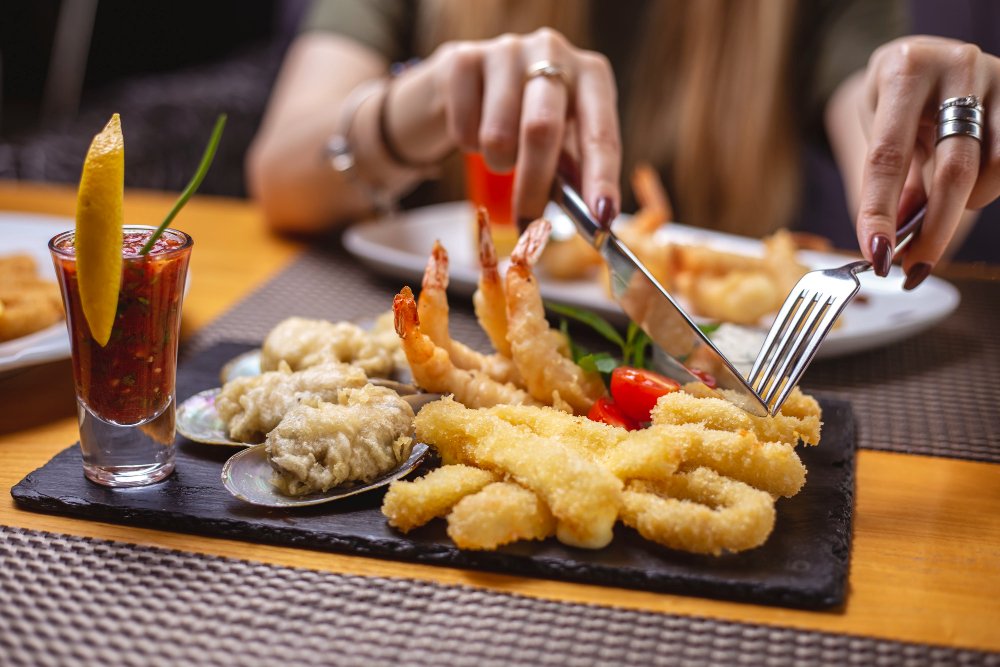
- Then something from the sea. Aguachile, a shrimp cocktail, a whole grilled zarandeado fish to share: eaten at a table on the sand at Los Muertos, facing the water, in wet hair.
- Coffee on the hill. The Romántica takes its espresso seriously. Take one up the hill and find a rooftop; several bars and cafés have them, all facing the bay.
- Save the churros for the Malecón at night. Trust us.
6:30 p.m. — the sunset, from the seawall
Here is where Puerto Vallarta's geography pays you back for the morning's drive. The Old Town faces west across the bay with nothing in the way. The sun drops straight into the Pacific, the water goes copper, the Malecón fills with families, musicians, street artists and the entire town, and for ten minutes nobody looks at a phone. In winter it goes down around six; in summer nearer eight, often with a lightning show far inland over the mountains for an encore. Stand on the seawall or the pier, or take a table at one of the Malecón restaurants — the view is the same, and it is free. From the water in the morning you watched the light arrive over the mountains; now you watch it leave over the sea. That is the whole day in Banderas Bay, and the reason we have never wanted to teach anywhere else.
8:00 p.m. — the Malecón after dark
The seawall becomes a fair: sand sculptors, a man who paints with spray cans in four minutes, mariachis for hire, the Flyers, kids with light-up toys, churro stands, and the sculptures doubling as climbing frames. Dinner options run from tacos on a corner to some of the best restaurants in western Mexico, all within a few blocks. Then bed — because the alarm for tomorrow's dawn patrol is set for 5:15, and the waves do not care what time the churros were.
Old Town logistics for surfers
- Getting north to the waves: our lessons include pick-up in Puerto Vallarta. Independently, the bus toward Punta de Mita leaves from near Walmart and the maritime terminal (a short taxi from the Romántica), or rent a car; the drive to La Lancha is 60–75 minutes off-peak.
- Boards in town: a soft-top under your arm on the Malecón gets smiles, not stares. Rent from our surfboard rentals in Nuevo Vallarta and we will help with transport.
- Where to sleep: Romántica or Centro for the town, Nuevo Vallarta or Sayulita for the waves. Our Stay page compares the options; many students split the trip — three nights north, two in town.
- Flat day? The whole Old Town is your no-surf-day plan, plus the boats, the jungle and the mountains behind it.
- Cash: the market island and the taco stands are cash-first. ATMs on the Malecón and in the Romántica.
- Shoes: cobblestones. Sandals with a strap, not flip-flops, unless you want the full local experience of losing one in a drain.
If you have a second afternoon in town
Most surf students get two or three Old Town afternoons in a week, so here is the second one. Climb Gringo Gulch, the hillside above the church where Hollywood moved in during the sixties after The Night of the Iguana was filmed down the coast at Mismaloya; the lanes are steep, quiet and full of bougainvillea, and the view back over the bay is worth every cobblestone. Then follow the Río Cuale upstream instead of down — a short walk inland on either bank takes you past small galleries, a couple of good coffee roasters and, in the wet season, a river that actually roars. Finish on the far south end of Los Muertos at the small rocky point, where the water is clearest for a swim and where, on a summer evening with a south swell running, you might just see that rare Old Town shore-break do its brief, dumping, entirely unsurfable thing — and understand why we drive north in the morning.
Frequently asked questions
Can you surf in Puerto Vallarta's Old Town at Los Muertos?
Rarely. Los Muertos sits deep inside the sheltered bay and only gets a small shore-break on big summer swells. The surf is 30–75 minutes north in Nuevo Vallarta, La Lancha, Punta de Mita and Sayulita.
How far is the Old Town from the surf beaches?
Nuevo Vallarta about 30 minutes by car from the Zona Romántica; La Lancha and Punta de Mita 60–75; Sayulita 75–90. Our lessons include pick-up, so a morning surf and an Old Town afternoon fit in one day.
When is the best time to walk the Malecón?
The hour before sunset, when the sun drops into the bay and the town comes out. Early morning is the other good window — empty and cool.
Is the Zona Romántica walkable from the Malecón?
Yes — cross the Río Cuale on a footbridge and you are there in five minutes. Malecón, Cuale island, Los Muertos beach and pier fit in one 25-minute walk.
Where should a surfer stay in Puerto Vallarta?
Zona Romántica or Centro for the town, with pick-up for lessons; Nuevo Vallarta, Bucerías or Sayulita for waves at the door. See our Stay page.