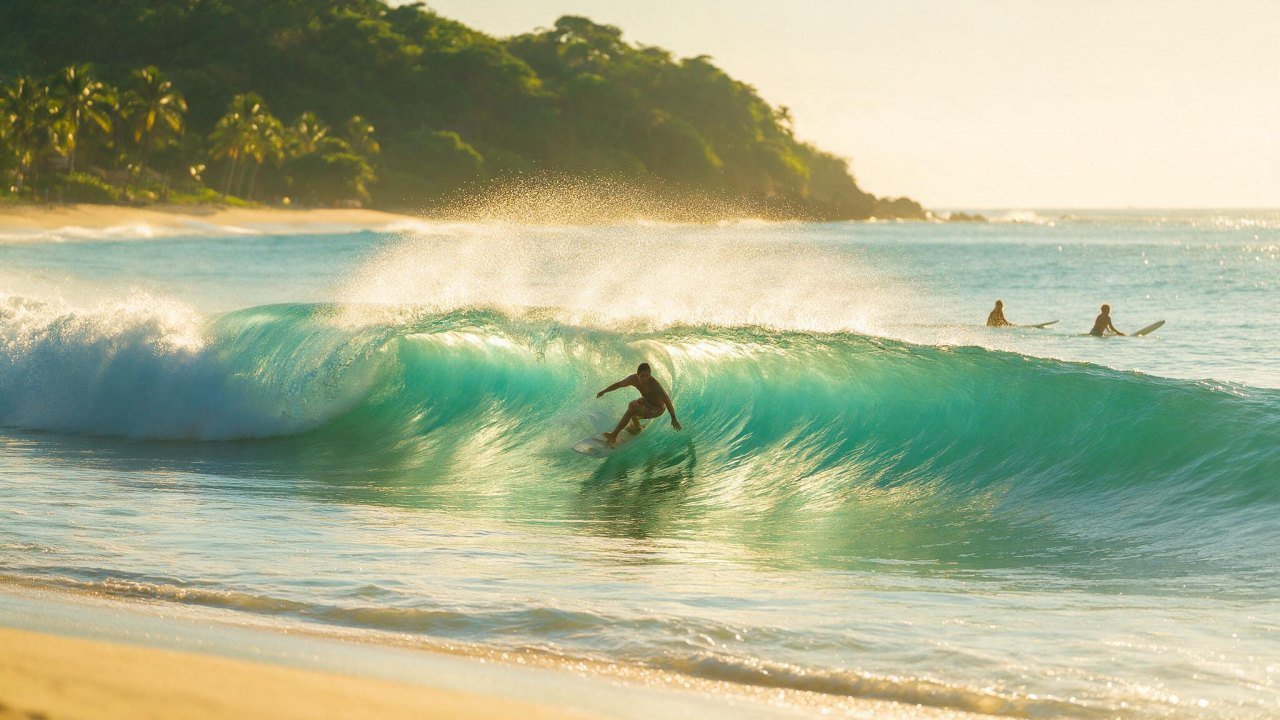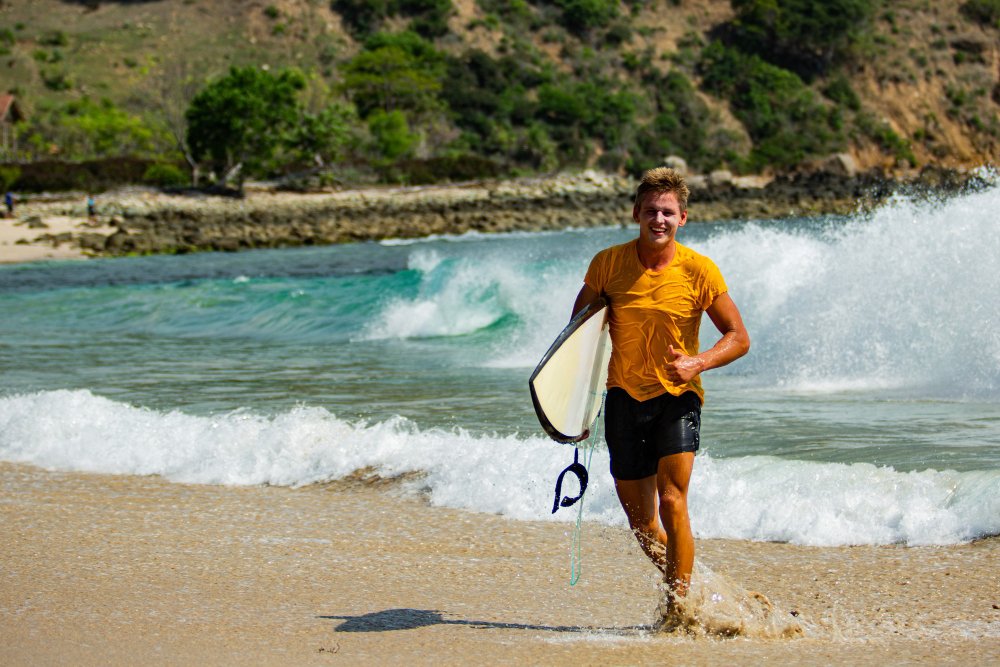

"Dawn patrol" is the oldest phrase in surfing that still gets used every day. It means going before the sun, and it exists because the best hour of waves on almost any coast in the world is the first one. In Puerto Vallarta the case for it is stronger than most places: our bay is tucked behind two headlands, our wind follows a clock you can set your watch by, and the drive to the good beginner waves takes you along one of the prettiest stretches of coast in Mexico while it is still empty. Here is what the morning actually looks like when you do it properly.
5:15 a.m. — the alarm, and why it is worth it
The science first, because it makes the alarm easier. Overnight the land cools faster than the sea. Cool air is heavy, so it slides down off the Sierra Madre and out across Banderas Bay toward the water — a gentle offshore breeze that locals call the terral. Offshore wind is the surfer's best friend: it holds the face of each wave up a fraction longer, combs the surface smooth, and gives you those glassy, oil-slick conditions you see in photographs. Around ten or eleven in the morning the sun heats the land, the flow reverses, and the sea breeze comes in onshore. The surface goes bumpy, the waves crumble early, and the magic is over until tomorrow.
That is why every serious surf lesson we teach starts early, and why our month-by-month guide to when to surf in Puerto Vallarta says the same thing for every month: mornings. In winter the sun clears the mountains around 7:00; in summer closer to 6:45. You want to be parking or stepping off the bus in the blue half-light just before that.
5:30 a.m. — coffee, board, and the empty Malecón
If you are staying in the Zona Romántica or the centre, this is the one time of day you will have the Malecón to yourself. The sculptures are lit, the bay is flat black glass, and the only people out are fishermen on the rocks at the far end and joggers doing the length of the seawall. The 24-hour OXXO and the first tortillerías are open; a coffee and a couple of sweet breads is the traditional dawn-patrol breakfast, with the real one coming after the surf. Fill a bottle of water here — there is nothing to buy on the beach at La Lancha.
Boards: if you are renting from us, we have your surfboard rental waiting at the store in Nuevo Vallarta, which is on your way north. If you are on a lesson, you do not carry anything at all; the boards, leashes and rash guards ride in the truck with us.
5:45 a.m. — north out of town
There are three ways to make the trip, and each has its own charm.
With us (the easy one)
Our private La Lancha surf day and the Ultimate Surf Trip include round-trip transport from Puerto Vallarta, Nuevo Vallarta and Bucerías. Emilian picks you up, the forecast has already been checked, and the only decision you make is whether to nap in the back or watch the bay wake up out of the window. When the forecast is good we start early — say so when you book and we will make it a proper dawn patrol.
Rental car
Highway 200 north: past the marina, over the Ameca river bridge into Nayarit, past the Nuevo Vallarta entrance, through Bucerías and La Cruz de Huanacaxtle, and on toward Punta de Mita. At 6:00 a.m. it is a 45–55 minute drive with the road almost to yourself; the same drive at 9:00 in high season can take over an hour and a half. Keep your speed down through the towns — the speed bumps (topes) are real, and so are the police.
The bus (the local one)
This is the version we love telling people about, because it costs almost nothing and it is a small adventure in itself. The green-and-white Compostela buses toward Punta de Mita leave from the stop by Walmart and the maritime terminal, across from the marina, from early morning, and pick up along the highway in Bucerías and La Cruz. Tell the driver "La Lancha" and he will drop you on Highway 200 at the trail, a few minutes before Punta de Mita. Boards ride in the aisle or under your arm; nobody minds. The fare is a handful of pesos, the windows are open, and the ranchera on the radio is included.
6:35 a.m. — the trail
La Lancha is not a beach you can see from the road, which is a large part of why it is still lovely. From the highway a narrow path drops into the jungle — ten minutes, give or take, on packed dirt between big trees, vines and the occasional iguana that has not moved since yesterday. In the wet months it is green and loud with birds; in the dry months it is dusty and the light comes through in stripes. Wear sandals you can walk in and carry your board nose-first: the path is tight in places. Somewhere in the last two minutes you start to hear the waves before you see them, and then the trees stop and the whole bay opens up in front of you, still in shadow, with the sun about to come over the mountains behind your shoulder.
6:50 a.m. — sunrise from the line-up
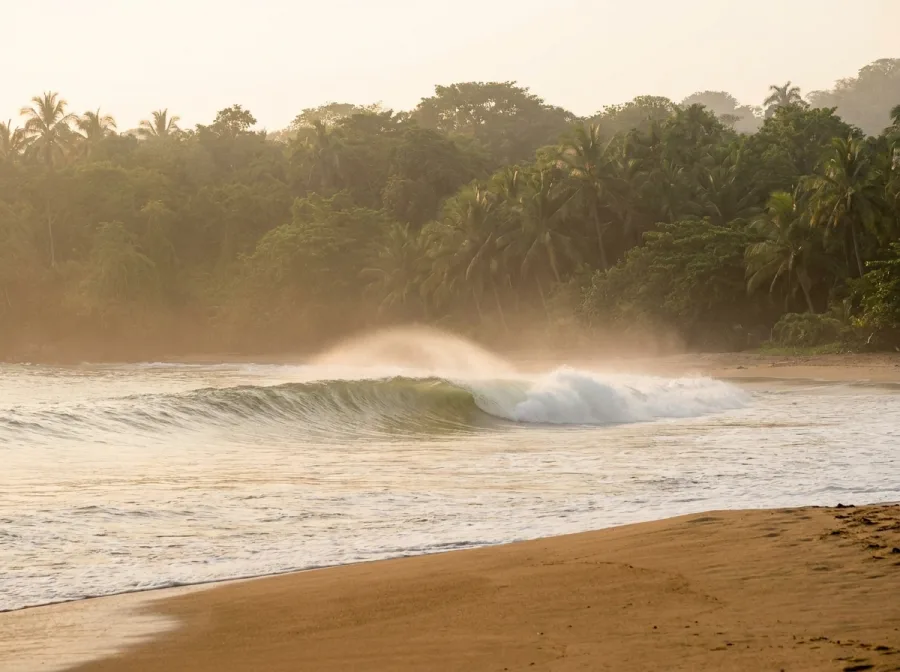
Here is the thing nobody tells you about sunrise surf in Puerto Vallarta: you do not watch the sun come up over the ocean. Our coast faces west, so the sun rises behind you, over the Sierra Madre, and what you see from the water is the light arriving — first on the tops of the swells out toward the Marietas Islands, then across the bay, then on the wet sand, then on you. The water is pewter, then gold, then blue. The offshore breeze is at its cleanest. If it is winter, this is the hour you are most likely to see a whale blow on the horizon (we wrote a whole guide to surfing in whale season 2026–2027). If it is summer, the sky over the mountains may still be doing the last of the night's lightning show far inland.
And the wave. La Lancha at dawn on a small clean swell is a long, slow, forgiving roller that stands up on the outside sandbar, lets you paddle into it without a fight, and then keeps going — and going — toward the beach. It is the wave we teach on because it gives you time: time to pop up, time to fall, time to try again on the same ride. On a good morning you will share it with a dozen people; on a great morning, with three.
7:00–9:00 a.m. — the session
Two hours is about right. Beginners run out of arms; experienced surfers run out of tide and wind. A few notes on making the most of it:
- Wax and rash guard on the beach, not in the water. Obvious, but at 6:50 with the waves calling, people forget.
- Watch three sets before you paddle out. Where is the peak? Which way is the current pulling? Where do the good surfers sit? La Lancha's outside, middle and inside sections behave differently — our La Lancha spot guide explains each.
- Sunscreen at 7 a.m. feels silly. It is not. The morning sun here is low but strong, and the water reflects it straight into your face.
- Drink the water you carried down. All of it. You will not notice you are thirsty until the walk back up.
- Leave when the wind turns. The moment the surface goes from glass to texture, the day has peaked. Walk out on a high.
9:15 a.m. — fish tacos in Punta de Mita
The trail back up is steeper than it was on the way down (it is not, but your legs disagree). At the top, turn right — either drive, catch the next bus, or walk ten minutes along the road — and you are in Punta de Mita, where the beachfront strip at El Anclote is putting out its first plates of the day: fish tacos, chilaquiles with a fried egg, fresh orange juice, real espresso. Sit facing the water. From here you can see the breaks around the point (our Punta Mita surf spots guide covers them) and, across the channel, the Marietas. It is not yet ten in the morning. You have surfed for two hours, walked through a jungle and eaten well, and the city behind you is only just getting its sun loungers out.
More food ideas for afterwards live in our guide to the best food for surfers in Puerto Vallarta, and if you want the whole day mapped out, Eat Like a Surfer has the beach-side and town-side favourites.
Dawn patrol variations: three other early mornings
Nuevo Vallarta — the 15-minute dawn patrol
If you are staying in the Hotel Zone or the marina, the beach at Nuevo Vallarta is the closest surf to your bed. Small, mellow beach-break waves, the sun coming up over the hotel skyline, and you can be back for the hotel breakfast you already paid for. Our store is right here.
Punta Burros — the quiet one
Tucked behind the point, Burros gets fewer people at dawn than anywhere else on this list. A longer, more consistent right for surfers who already stand up and want room to practise turning.
Sayulita — the social one
Sayulita's town break at 7 a.m. is a different place from Sayulita at 11 a.m.: half the people, twice the waves. Follow it with breakfast in one of the town's cafés and you have done Sayulita the way locals do it. Details in our surf spots map.
Dawn patrol packing list
- Water — a litre at least; there is nothing to buy at La Lancha.
- Sandals you can walk a jungle trail in; the path is uneven.
- Rash guard + reef-safe sunscreen (rash guard included if you are on a lesson).
- A light layer in winter — 6 a.m. is 18–20 °C; it is 28 by the time you leave.
- Small cash for the bus and breakfast; card machines in Punta de Mita are hit and miss early.
- A towel and a dry T-shirt for the ride back. Your future self on the bus will thank you.
- Nothing else if you are with us — board, leash, wax and transport are all in every Vallarta Surf lesson.
Frequently asked questions
What time should I leave Puerto Vallarta to surf La Lancha at sunrise?
Around 5:45 a.m. from the Hotel Zone or Marina. Allow 45–60 minutes of driving and 10 minutes on the trail, and you will be on the sand as the sun clears the mountains — about 7:00 in winter, 6:45 in summer.
Why is the surf better early in the morning here?
The overnight land breeze blows offshore and holds the waves smooth. By late morning the sea breeze turns onshore and the surface goes bumpy. Dawn is the glassiest window almost every day of the year.
How do I get to La Lancha without a car?
Take a Compostela-line bus toward Punta de Mita from the stop near Walmart and the maritime terminal (or from Bucerías / La Cruz) and ask the driver for La Lancha. The stop is on Highway 200 a few minutes before Punta de Mita; the trail starts at the road.
Does Vallarta Surf pick students up for early lessons?
Yes — our La Lancha private day and the Ultimate Surf Trip include round-trip transport from Puerto Vallarta, Nuevo Vallarta and Bucerías, and we start early whenever the forecast calls for it.
Is there anywhere to eat near La Lancha after surfing?
Not on the beach. Five minutes up the road, the beachfront at El Anclote in Punta de Mita serves breakfast from about 8:30 a.m.