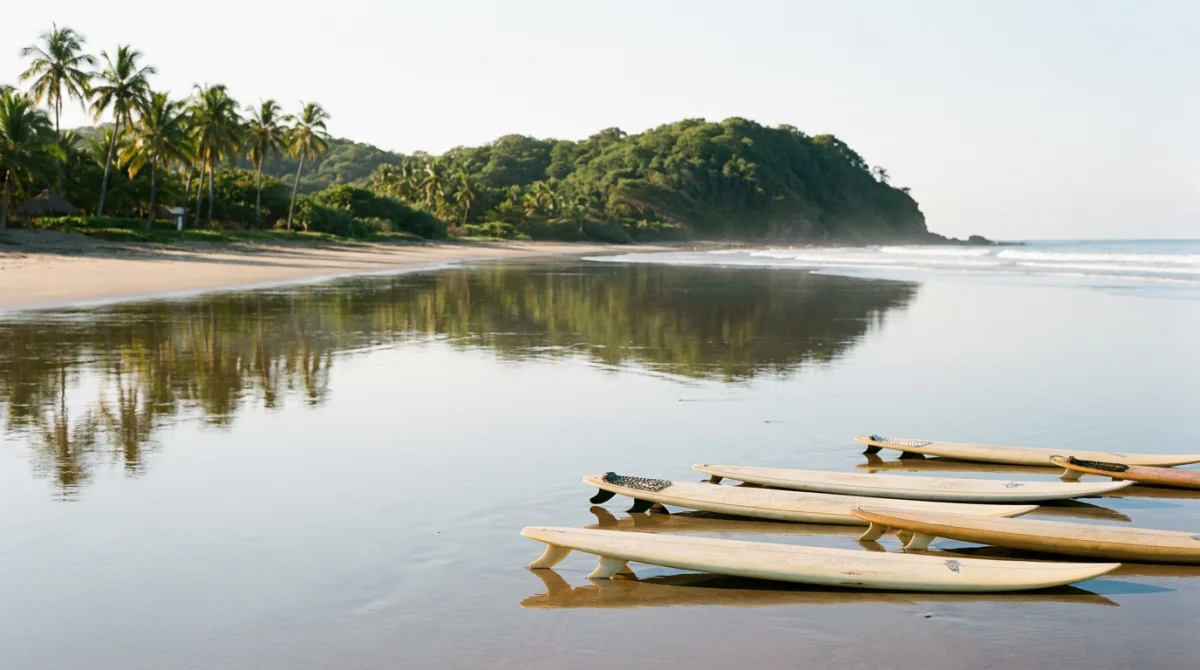
Every surfer who lives in Puerto Vallarta long enough ends up with the same conversation in May, when the northwest swell is gone and the south swell has not quite arrived. "Where do you go when it is flat?" The honest answer, for a lot of us, is across the country to the other coast of Baja California — not the Pacific side, where the waves are, but the Sea of Cortez, where there are none, and where a small town called Loreto has the clearest, calmest, fishiest water in Mexico.
This is not a surf guide. Loreto has no surf. This is a guide to the trip you take because it has no surf: a private boat charter in Loreto that mixes a real fishing charter, snorkeling with sea lions, blue whales in winter and island beaches you reach by panga and leave without seeing another group. We have sent enough students and friends there that it was time to write it down properly.
Why a Vallarta surf school is writing about Loreto
Because the two coasts are complementary. Banderas Bay gives you warm water, a long learning season and, on the north shore, some of the friendliest point breaks in the country — we covered the whole calendar in our month-by-month guide to surfing Puerto Vallarta. What it does not give you is visibility. Our bay is a working bay with rivers running into it; on a good day at Los Arcos or Majahuitas you get eight to ten metres, and that is a good day.
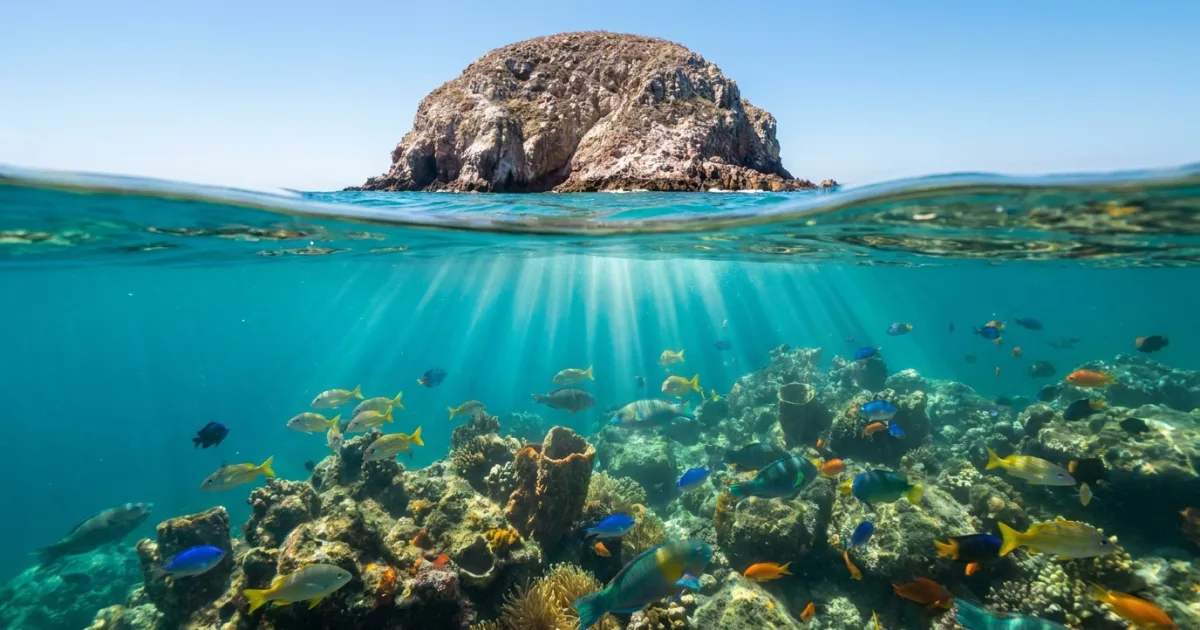
Loreto sits inside the Parque Nacional Bahía de Loreto, a UNESCO-listed national marine park with five islands just offshore, no river silt, and a desert coastline that drops straight into deep, sheltered water. Twenty-metre visibility is normal. Sea lions come to look at you. Blue whales — the largest animals that have ever lived — feed in the channel between town and the islands for three months every winter. And because the sea is flat, a six-person panga is all the boat you need.
So this is the trip we recommend for the off-season, for the non-surfing partner, for the family week, or as the second half of a Baja road trip after the Pacific breaks around Todos Santos and Cerritos. Surf the Pacific, then drive over the mountains and go fishing and snorkeling on the other side.
Private Boat Charters in Loreto: how the boat works
The operator we send people to is Loreto Star Adventures, a one-boat, owner-run outfit working out of the Loreto marina. The model is the same one we like on our own coast: you do not buy a "tour", you rent the whole boat, the captain and the day, by the hour, and you decide what the day is. Fish first, snorkel second, beach third. Or whales at sunrise and a beach for lunch. Or just the beach.
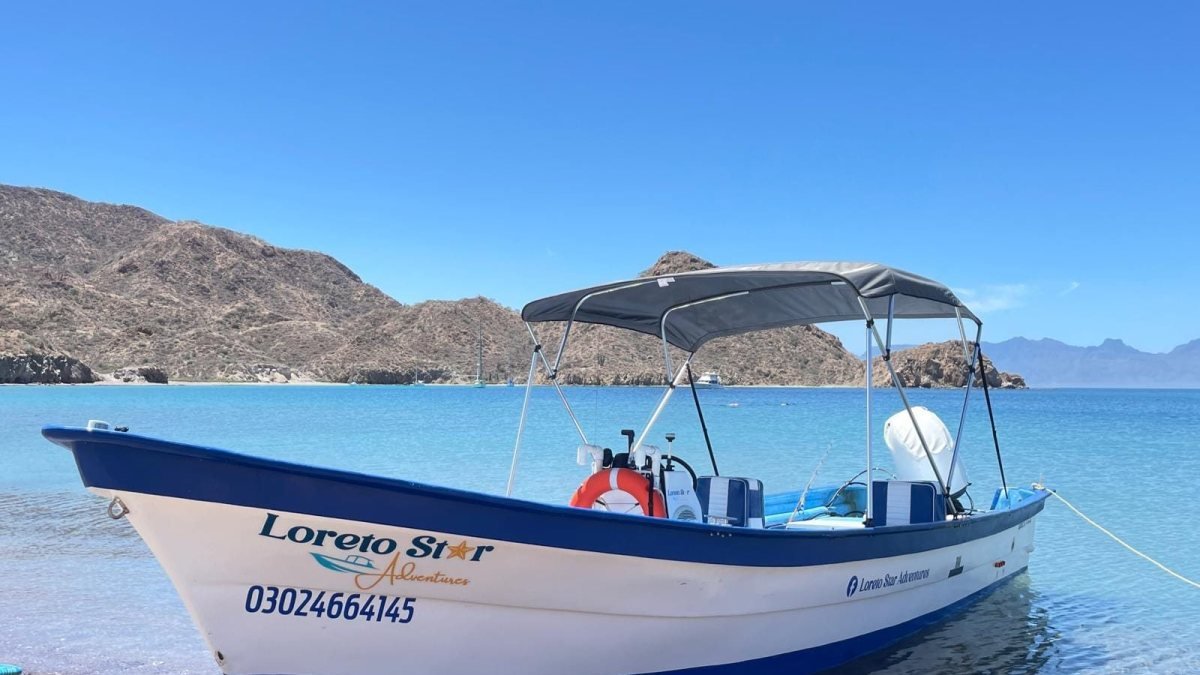
The Loreto Star panga
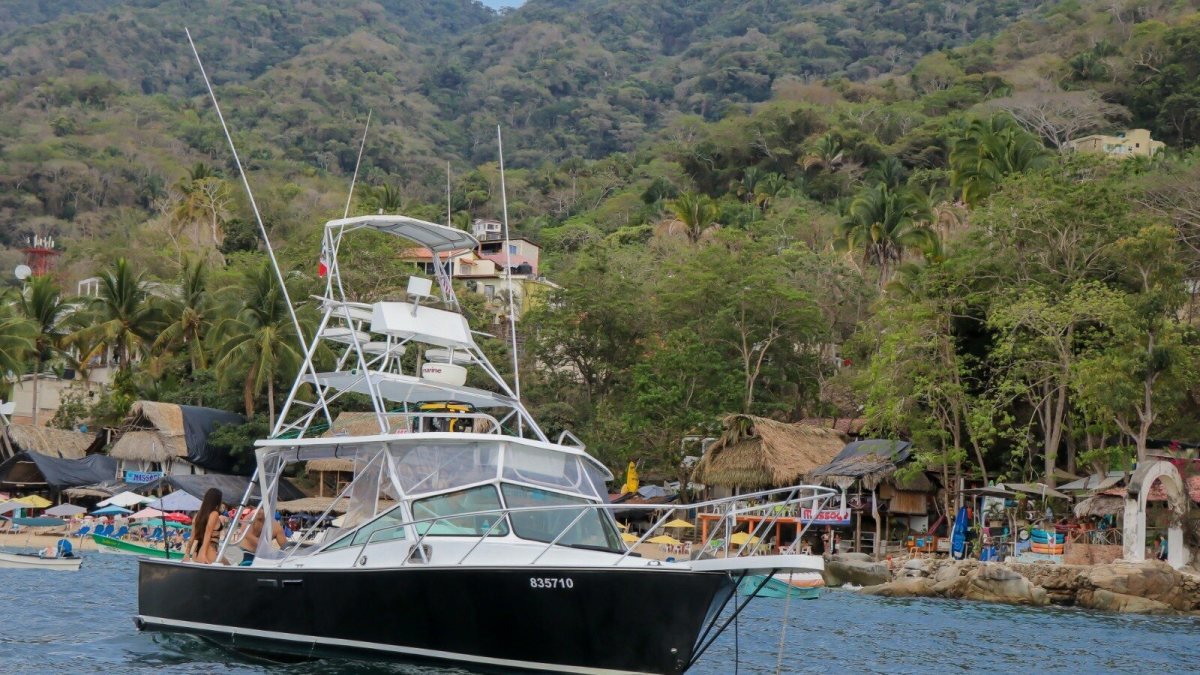
The boat is the Loreto Star, a classic Baja panga with a bimini shade, room for up to six guests plus the captain, and rods, tackle and bait already aboard. A panga is the right tool here. It runs shallow enough to nose onto a beach, it turns inside the rocky coves where the sea lions haul out, and it is small enough that six people on the bow feel like they own the sea. The big sport-fishers you see in Cabo cannot do any of that.
- Capacity: up to 6 guests + captain.
- Hours: departures between 6:00 am and 6:00 pm; the boat is rented by the hour with a 5-hour minimum. Want to come back earlier? You can.
- Included: captain, fuel, life jackets, rods, tackle and bait, shade tent, chairs and a cooler with ice for the beach.
- Price: quoted by WhatsApp for the whole boat, not per person. No prices are published online, and there is no online payment — you message, you get a number, you confirm.
Why hourly beats a fixed tour
Because the islands are at different distances. Isla Coronado is a 20–25 minute run and a perfect five-hour day. Isla Danzante is 40–50 minutes south and wants five to six. Isla del Carmen, the big one, is six to seven. On a fixed-itinerary tour somebody else made that call for you. On an hourly charter the number of hours is the itinerary, and every extra hour buys a second snorkel stop, a longer anchor, or a couple of lines in the water on the crossing.
Fishing Charter in Loreto: what bites, and when
Loreto was a fishing town for centuries before it was anything else, and the water around the islands is some of the most productive in the whole Sea of Cortez. A fishing charter in Loreto on the Loreto Star is not the offshore-big-game format we know from Banderas Bay, where the good stuff is eight to ten hours out at Corbeteña. Here the fish are twenty minutes from the dock, along rocky points, drop-offs and current lines between the islands that a panga can work and a 50-footer cannot.
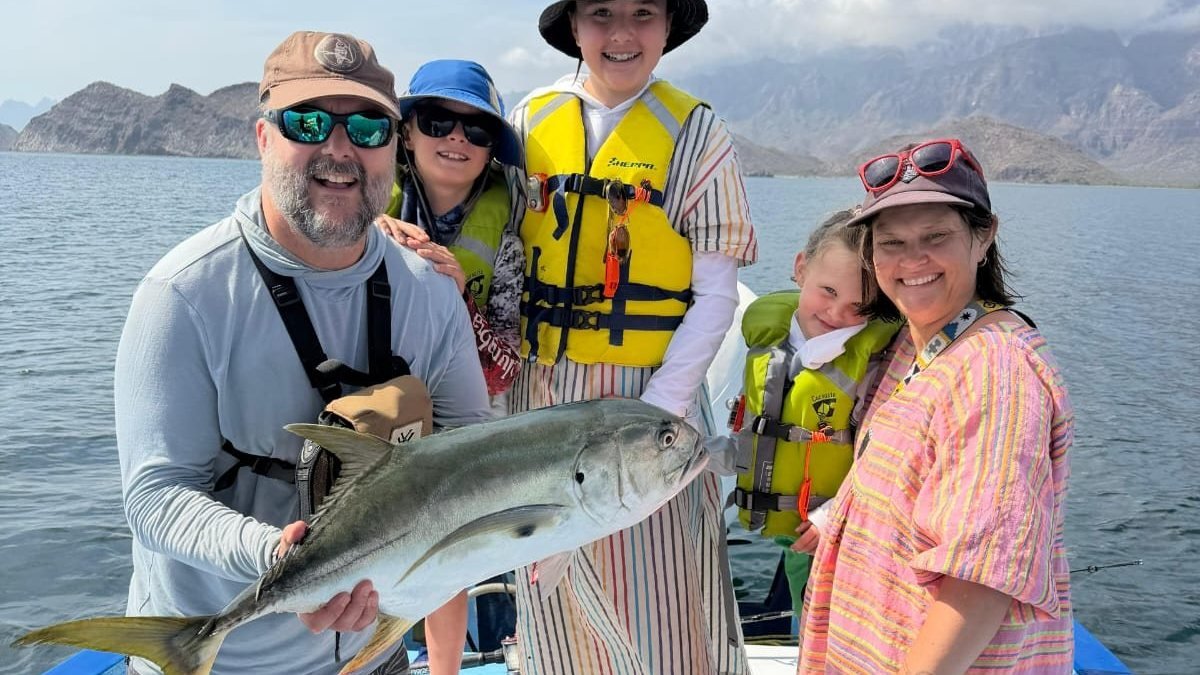
The Loreto fishing calendar
🐟 Yellowtail — December to April. The winter fish. Strong, deep, stubborn; jigged and live-baited along the rocky points and high spots. Also the best eating of the year.
🐠 Dorado (mahi-mahi) — June to October. Loreto's signature summer fish, trolled along the current lines and floating weed between the islands. Fast, acrobatic, unmissable on the plate.
🐓 Roosterfish — May to October. Inshore, along the beaches and rocky shores. A catch-and-release trophy.
⚔️ Billfish — July to October. Sailfish and marlin further out; this is the one that wants an eight-hour-plus day.
🍽️ Year-round: sierra, cabrilla, snapper and triggerfish on the reefs — dinner fish, and the reason lunch on the island is sometimes cooked on the spot.
Because it is the same boat, the same captain and the same hourly clock, the classic Loreto day for a mixed group is fish the morning, snorkel and beach the afternoon. Lines in at seven, a yellowtail or two by ten, then mask on with the sea lions and a shade tent on the sand by noon. Nobody on the boat has to choose between the angler and the swimmer.
Snorkeling in Loreto: the islands, one by one
This is the part that gets Vallarta people. The Loreto island tours are built around water so clear that from the bow you can count the rays on the bottom. There are five islands in the park; Loreto Star Adventures works three, and each one is a different day.
Isla Coronado — the classic, 5 hours
📍 Where: 11 km north of Loreto, 20–25 minutes by panga. The volcanic cone you see from the malecón.
🤿 Snorkel: the sea lion colony on the rocky north end — you swim in from the boat and they come to inspect you — and the reef along the rocky side: king angelfish, sergeant majors, parrotfish, rays and the occasional turtle. Clearest water in the park.
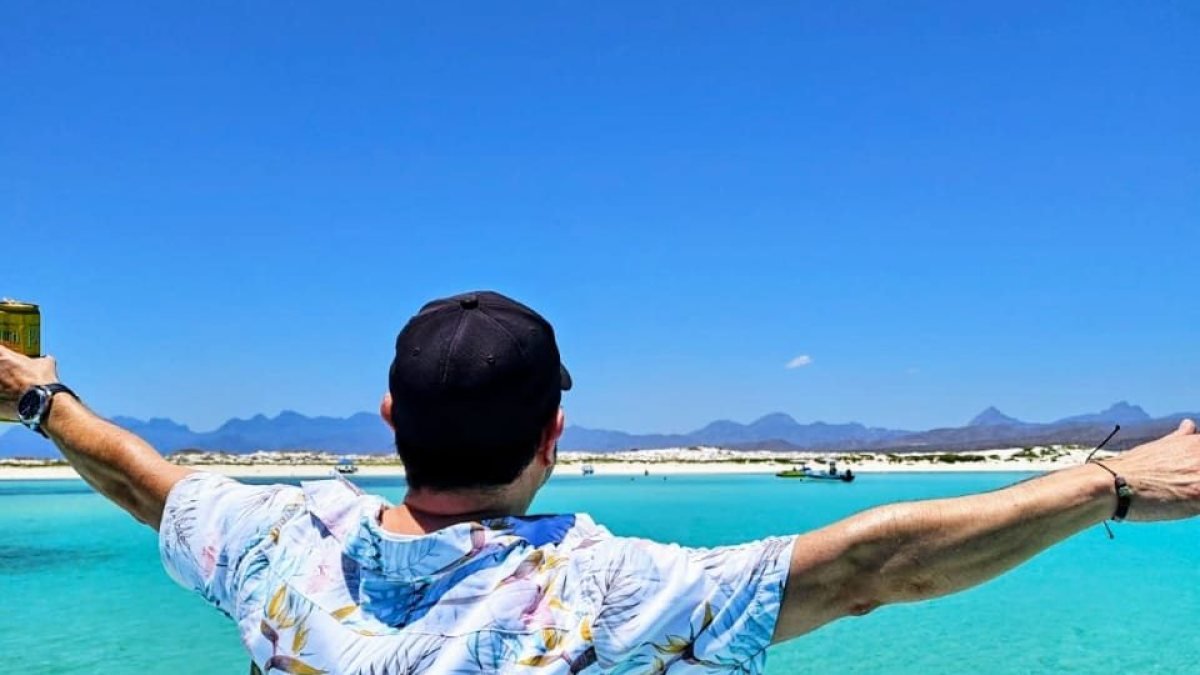
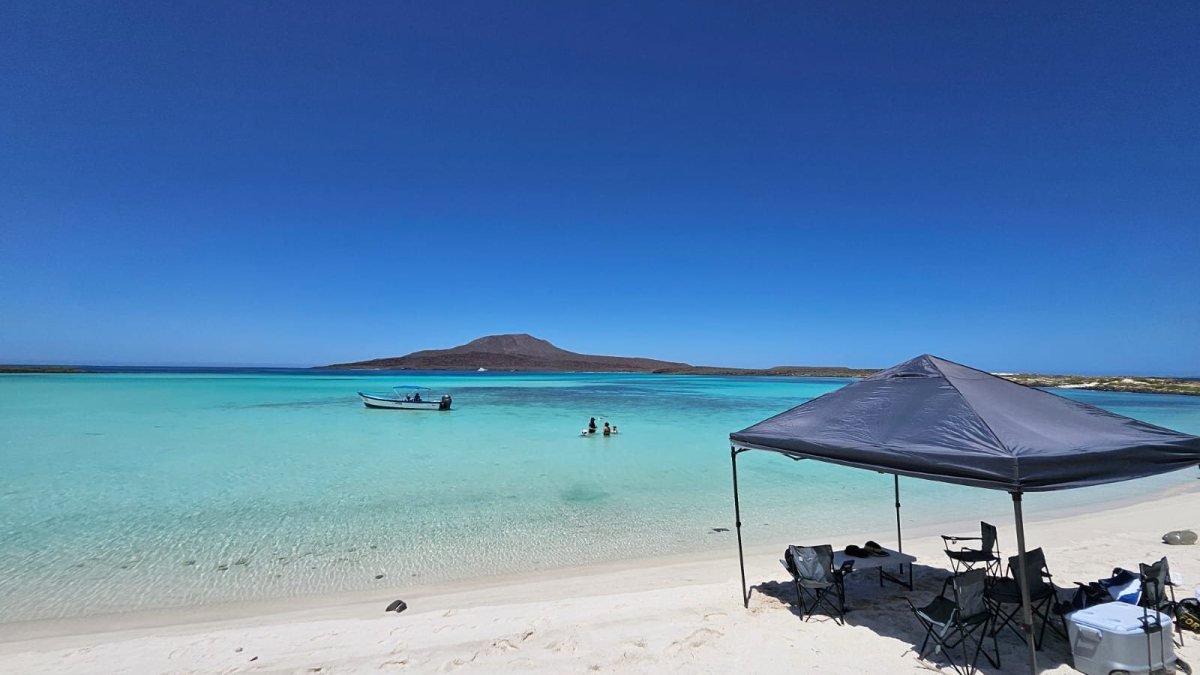
🏖️ Beach: a curve of white sand on the sheltered south-western side that drops into shallow, glass-clear turquoise. Shade tent, chairs, cooler, lunch. Blue-footed boobies on the cliffs.
✅ Verdict: if you only have one day, this is it. Beginners, kids, non-swimmers who want to sit in warm water — all fine. Full page: Isla Coronado.
Isla Danzante — the wilder one, 5–6 hours
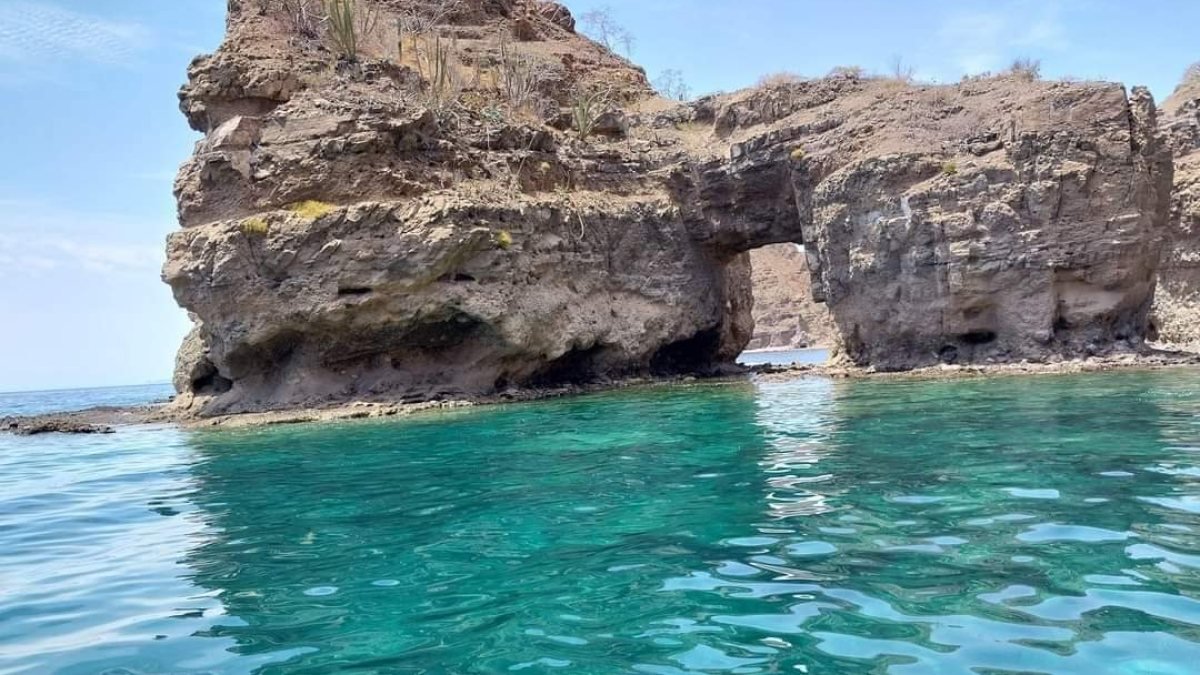
📍 Where: 25 km south of town, 40–50 minutes. Long, thin, cut with small coves on its western side.
🤿 Snorkel: over boulder reef rather than sand — arches, ledges and drop-offs where the fish life is denser and the light does strange things. Honeymoon Cove is the famous anchorage.
✅ Verdict: for people who have already done Coronado, or who want the quieter, more rugged island. Confident swimmers get the most out of it. Full page: Isla Danzante.
Isla del Carmen — the big empty one, 6–7 hours
📍 Where: 15 km east across the bay, 45–60 minutes. The largest island in the park, thirty kilometres long, and almost nobody lives there.
🏖️ What you get: long sand beaches with a whole bay to yourselves, rocky headlands, and the abandoned salt-mining town at Bahía Salinas.
✅ Verdict: the day for people who have time and want to feel far away. Book the hours; you will use them. Full page: Isla del Carmen.
What an island day actually looks like
You leave the Loreto marina in the morning, when the Sea of Cortez is usually glass. On the crossing the captain watches for dolphins and boobies, and from January to March there is a real chance of a whale before you reach the island. First stop is normally the sea lions. Then the beach: tent up, chairs out, cooler open, and the rest of the day is swimming, snorkeling straight off the sand and doing nothing whatsoever. You run back in the early afternoon before the wind picks up — which, for anyone who has surfed our north shore, is the same logic as an early session before the onshore fills in.
Blue whale watching in Loreto: the winter bonus
We are spoiled in Banderas Bay: humpbacks breach in front of our lineups every winter, and we wrote about that in Surfing & Whale Watching in Puerto Vallarta. Loreto is a different animal, literally. From mid-January to late March — February and the first half of March being the most consistent — blue whales come into the deep, sheltered channel between Loreto and the islands to feed. Fin whales, the second-largest animal on the planet, are there over the same window. Humpbacks pass through. Some winters bring orcas and pilot whales. Dolphins are around all year.
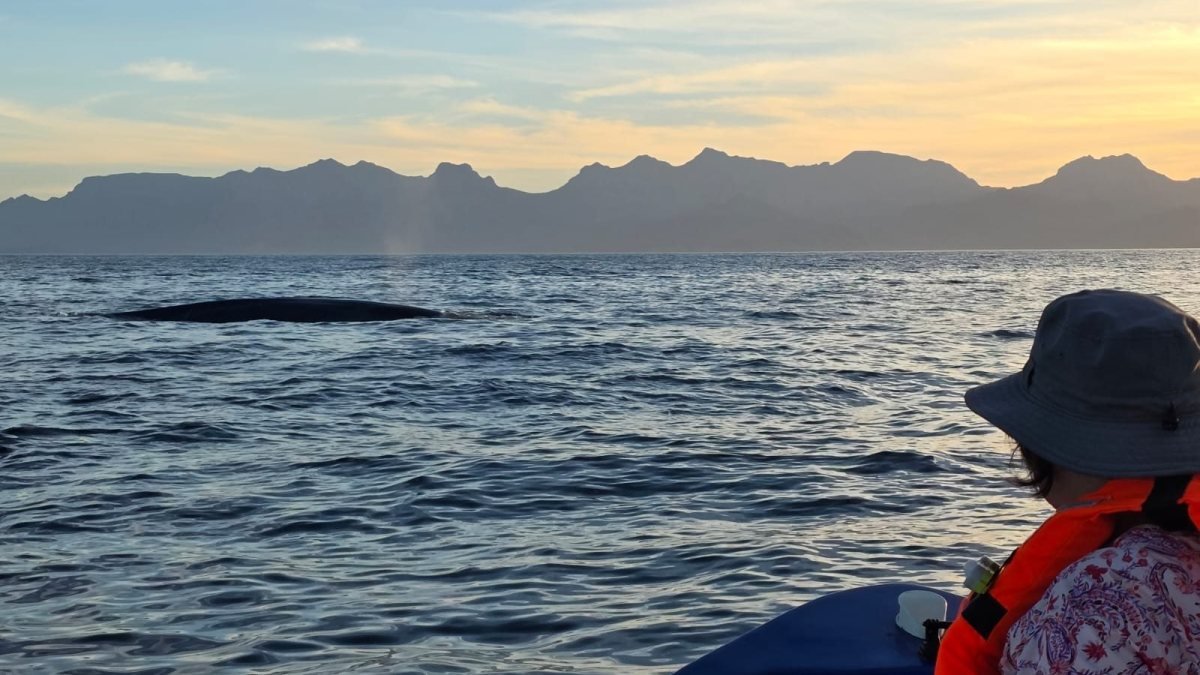
A whale watching trip in Loreto on the Loreto Star leaves around sunrise, when a blow is visible from a long way off across flat water. The captain runs to the channel, cuts the engine and waits. A blue whale surfaces to breathe for a few minutes and dives for ten to fifteen, so a good morning is a rhythm of watching, waiting and repositioning — with no bus, no crowd and no fixed route. Five hours is the right length, and it leaves time to fold in a beach stop at Coronado on the way home. Watching inside the marine park is regulated: distance kept, approach from the side, never chase, and the animal decides how close it wants to come. On a calm day that is often much closer than you expect.
Planning the trip from Puerto Vallarta
Getting there
Loreto has its own international airport (LTO). There is no direct flight from Vallarta, so you connect through a hub — Mexico City, Tijuana, or a US gateway such as Los Angeles — or, better, you make it part of a Baja trip: fly into La Paz or Los Cabos, surf the Pacific side around Todos Santos, then drive north over the Sierra de la Giganta to Loreto. The town itself is small, walkable and slow, with a 1697 mission, a malecón and the islands sitting right there on the horizon. For everything beyond the boat, the operator's own guide to things to do in Loreto is the most honest one we have read.
When to go
- January–March: blue whales, yellowtail fishing, cool mornings on the water (bring a windbreaker), the most sought-after weeks.
- April–June: our favourite. Water warming, whales gone but the sea lions and reef at their best, dorado arriving in June, town quiet. It is also exactly when Vallarta's swell is at its thinnest — see the flat-day plan.
- July–October: hot, humid and bathwater-clear; peak dorado and roosterfish, billfish offshore, early departures to beat the heat. Hurricane season applies, as it does at home.
- November–December: the shoulder, calm and uncrowded, first yellowtail of the winter.
What to bring
- Your own mask, snorkel and fins if you have them (or ask when you book).
- Reef-safe sunscreen, a hat that stays on at speed, sunglasses, a rash guard — the same kit you wear for a surf lesson with us.
- A windbreaker for winter mornings; a long lens and binoculars in whale season.
- Cash for the marine park entry bracelet and a tip for the captain.
Booking
Loreto Star Adventures runs everything through WhatsApp. You pick a tour or an island on their site, send the date, hours and group size, and they answer with a quote for the whole boat. No online payment, no deposit gateway, no prices on the page — which, for an owner-run panga in a town of twenty thousand people, is exactly how it should be. Start with their tours in Loreto or go straight to loretostaradventures.com.
Loreto vs. Banderas Bay: the honest comparison
🌊 Surf: Vallarta, obviously. Loreto has none. That is the feature.
🤿 Snorkeling: Loreto by a mile — visibility, sea lions, no crowds. Our best is Majahuitas and the Marietas; theirs is every island.
🎣 Fishing: different games. Vallarta is offshore big game — marlin, tuna at Corbeteña and El Banco, long days on a big boat. Loreto is close, varied and panga-scale: yellowtail, dorado, roosterfish twenty minutes from the dock.
🐋 Whales: humpbacks here, blue whales there. Do both in one winter and you have seen the two ends of the scale.
🏖️ Beaches: ours are jungle coves you reach by boat — Colomitos, Las Ánimas, Yelapa. Theirs are desert islands with white sand and nobody on them. Also by boat.
If you are already on this coast for the waves, do the flat-water trip once. If you are planning a Baja surf trip, put Loreto at the end of it. And if the bay is flat next week and you are staring at a forecast, it is a shorter hop than you think.
Frequently asked questions
How do I get to Loreto from Puerto Vallarta?
Loreto has its own international airport (LTO) on the Sea of Cortez side of Baja California Sur. There is no direct flight from Vallarta; connect through Mexico City, Tijuana or a US gateway such as Los Angeles, or fold it into a Baja road trip from La Paz or Los Cabos.
How long is a private boat charter in Loreto?
The Loreto Star is rented by the hour with a five-hour minimum, between 6:00 am and 6:00 pm. Isla Coronado needs about five hours, Danzante five to six, Isla del Carmen six to seven. Want to come back earlier? You can.
How much does a fishing charter in Loreto cost?
Loreto Star Adventures does not publish prices online. Send the date, hours and group size by WhatsApp and you get a quote for the whole boat — captain, fuel, rods, tackle and bait included — not a per-person rate.
Is there surf in Loreto?
No. The Sea of Cortez is sheltered from Pacific swell. That is precisely why it is the trip for the off-season, for the non-surfer in the group, or for the second half of a Baja surf trip.
When can you see blue whales in Loreto?
Mid-January to late March, sometimes early April. February and the first half of March are the most consistent weeks. Fin whales and humpbacks share the window; dolphins are around all year.
Do I need my own snorkel gear?
Bring mask and fins if you own them, or ask when you book. The sea-lion stop and the reef at Isla Coronado are shallow and very clear, so basic gear is fine.
How many people fit on the boat?
Up to six guests plus the captain. Bigger groups split into two days or two departures — ask the operator.
References: Loreto Star Adventures — Private Boat Charters in Loreto · The Loreto Star panga · Sport fishing in Loreto · Loreto island tours · Blue whale watching in Loreto · The islands of Loreto Bay National Marine Park. All photographs courtesy of Loreto Star Adventures.